
Honey Oat Artisan Bread
I grew up eating homemade bread from a bread machine because I’m a millennial and a child of the ’90s and honestly, warm homemade bread still feels a little like home to me.
This honey oat artisan bread has everything I want in a cozy loaf: a beautifully golden crust, a soft and hearty center, and just enough honey to give it a subtle sweetness. The oats add texture without making the bread heavy, and a simple honey wash gives the top that gorgeous, burnished finish.
It looks impressive, but it’s made with everyday ingredients and active dry yeast — no sourdough starter or overnight rise required. Serve it warm with salted butter, toast it for breakfast, or tuck it alongside a bowl of soup.
Why You’ll Love This Honey Oat Bread
It’s ready in less than 3 hours.
Soaking the oats keeps the inside soft and moist.
Honey adds gentle sweetness without making it taste like dessert.
A Dutch oven creates a crisp, bakery-style crust.
It’s approachable enough for a beginner bread baker.
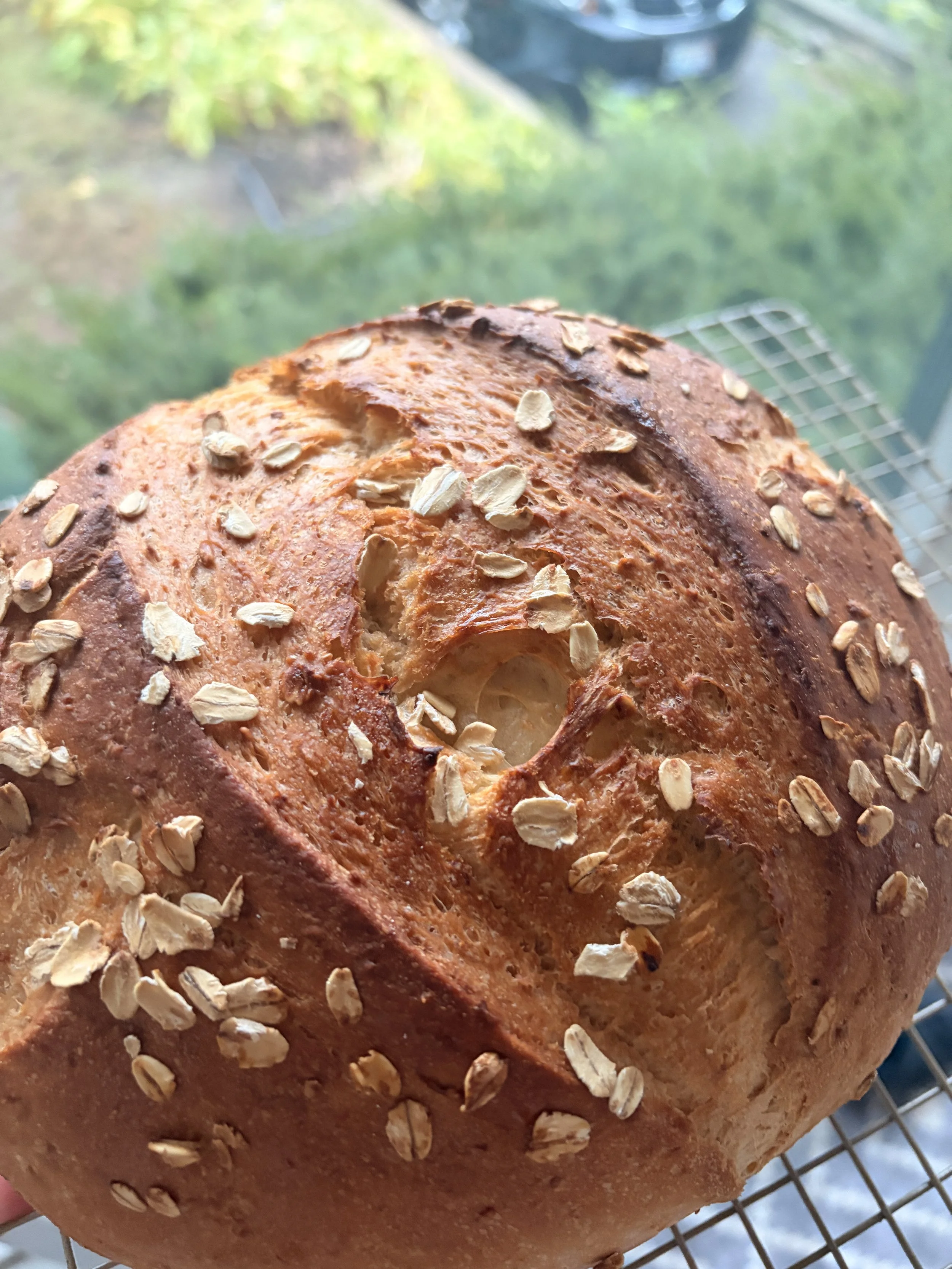
Honey Oat Artisan Bread
Yield: 1 round loaf
Active time: About 20 minutes
Rise time: 1½–2 hours
Bake time: 37–41 minutes
Ingredients
½ cup old-fashioned oats, plus more for topping
½ cup boiling water
¾ cup warm water, 100–110°F
2 teaspoons active dry yeast
3 tablespoons honey, divided
3 cups bread flour, plus more if needed
2 teaspoons kosher salt
1 tablespoon softened butter or olive oil
1 teaspoon warm water, for the honey wash
Instructions
Place ½ cup oats in a small bowl and pour the boiling water over them. Stir and let them sit for about 10 minutes, until softened and no longer hot.
Combine the ¾ cup warm water, yeast, and 2 tablespoons honey. Let the mixture sit for 5–10 minutes, until foamy.
In the bowl of a stand mixer or a large mixing bowl, combine the bread flour and salt. Add the soaked oats, yeast mixture, and softened butter or olive oil. Mix until a shaggy dough forms.
Knead with the dough hook for 7–8 minutes, or by hand for 8–10 minutes. The dough should become smooth and elastic. It may remain slightly tacky, but it should hold its shape. If it is excessively sticky, add additional flour 1 tablespoon at a time.
Place the dough in a lightly greased bowl and cover it. Let it rise in a warm place for 60–90 minutes, or until approximately doubled in size.
Turn the dough onto a lightly floured surface. Gently shape it into a tight round, creating surface tension by pulling the edges underneath. Place the loaf on a sheet of parchment paper.
Cover the shaped loaf and let it rise for 30–40 minutes. During the final 30 minutes, place your Dutch oven and lid in the oven and preheat to 450°F.
Stir the remaining 1 tablespoon honey with 1 teaspoon warm water. Score the top of the loaf with a sharp knife or bread lame, then lightly brush it with the honey mixture. Sprinkle with additional oats and gently press them onto the surface.
Carefully lower the parchment and dough into the hot Dutch oven. Cover with the lid, place it in the oven, and immediately reduce the temperature to 425°F. Bake covered for 25 minutes.
Remove the lid and bake for another 12–16 minutes, until the crust is deeply golden and the center reaches 200–205°F. Because of the honey, the crust can brown quickly during the uncovered portion. Loosely tent it with foil if needed.
Transfer the bread to a wire rack and let it cool for at least 30 minutes before slicing. The inside continues to set as the loaf cools.
Expert Tips for the Best Loaf
Let the soaked oats cool. If the oat mixture is still hot when added to the dough, it could damage the yeast.
Measure the flour carefully. Spoon the flour into your measuring cup and level it rather than scooping directly from the bag. Too much flour can make the loaf dense.
Expect a slightly tacky dough. The oats and honey make this dough softer than a basic artisan dough. Avoid adding too much additional flour.
Watch the dough, not just the clock. The temperature of your kitchen affects rising time. Look for a dough that has approximately doubled during the first rise and looks noticeably puffy during the second.
Preheat the Dutch oven. A thoroughly heated Dutch oven traps steam and helps create a crisp crust with better oven spring.
Watch the crust closely. The honey wash gives this bread its beautiful color, but it also causes it to brown more quickly.
How to Store Honey Oat Artisan Bread
Once the loaf has cooled completely, store it in a bread bag or loosely wrapped at room temperature for up to three days. An airtight container will keep the inside softer but will also soften the crust.
For longer storage, slice the cooled bread and freeze it in an airtight freezer bag for up to three months. Toast individual slices directly from frozen.
Serving Ideas
This bread is especially delicious:
Warm with salted butter and an extra drizzle of honey
Served beside chicken wild rice soup or a hearty fall stew
Toasted and topped with butter and cinnamon sugar
Used for turkey, ham, or grilled cheese sandwiches
Turned into French toast the next morning
